The Bear Minimum

The Bear Minimum

Why effective management is essential in the Mount Abu – Jessore Corridor

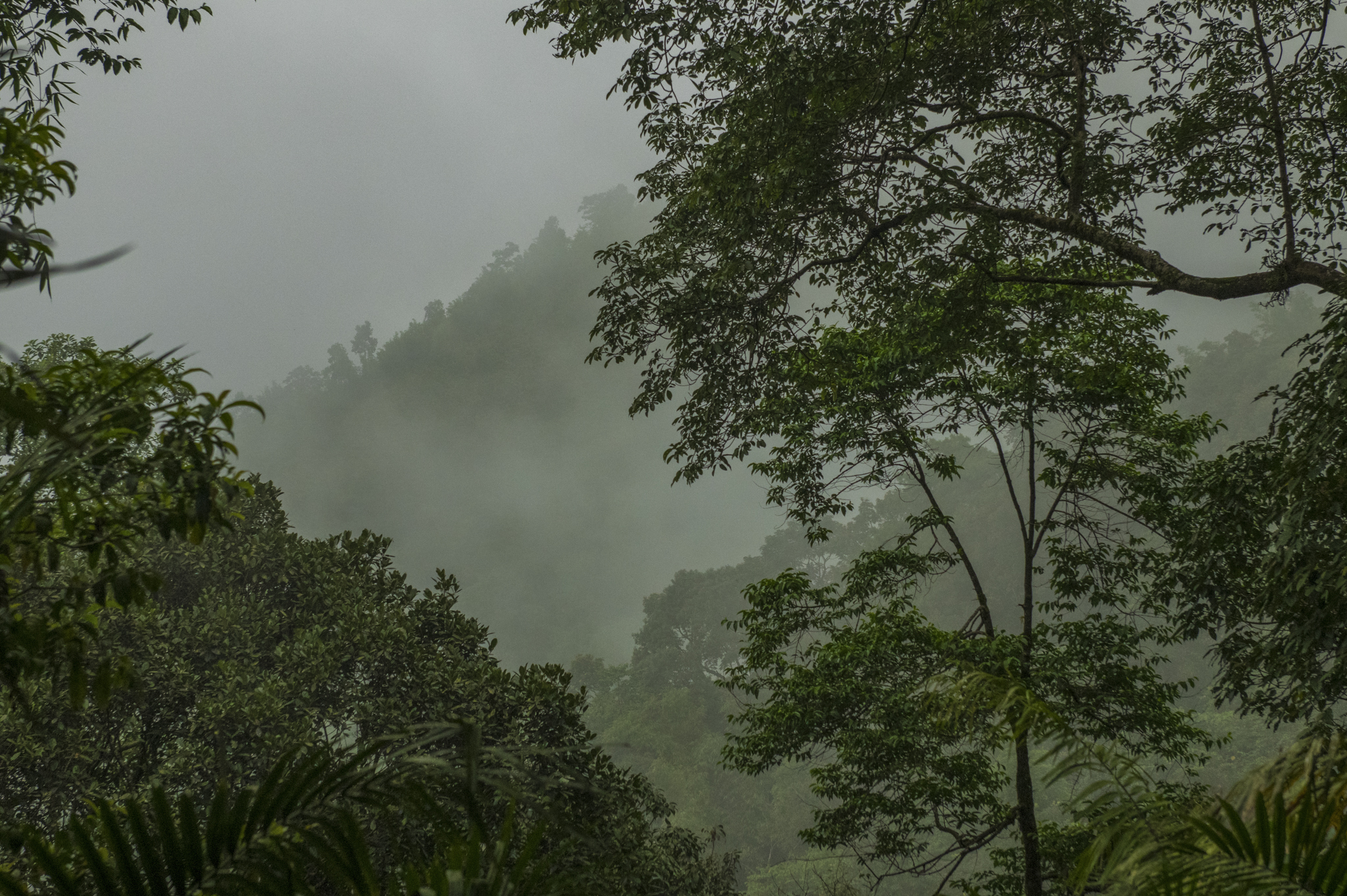
© PRASENJEET YADAV

Sonal Sharma

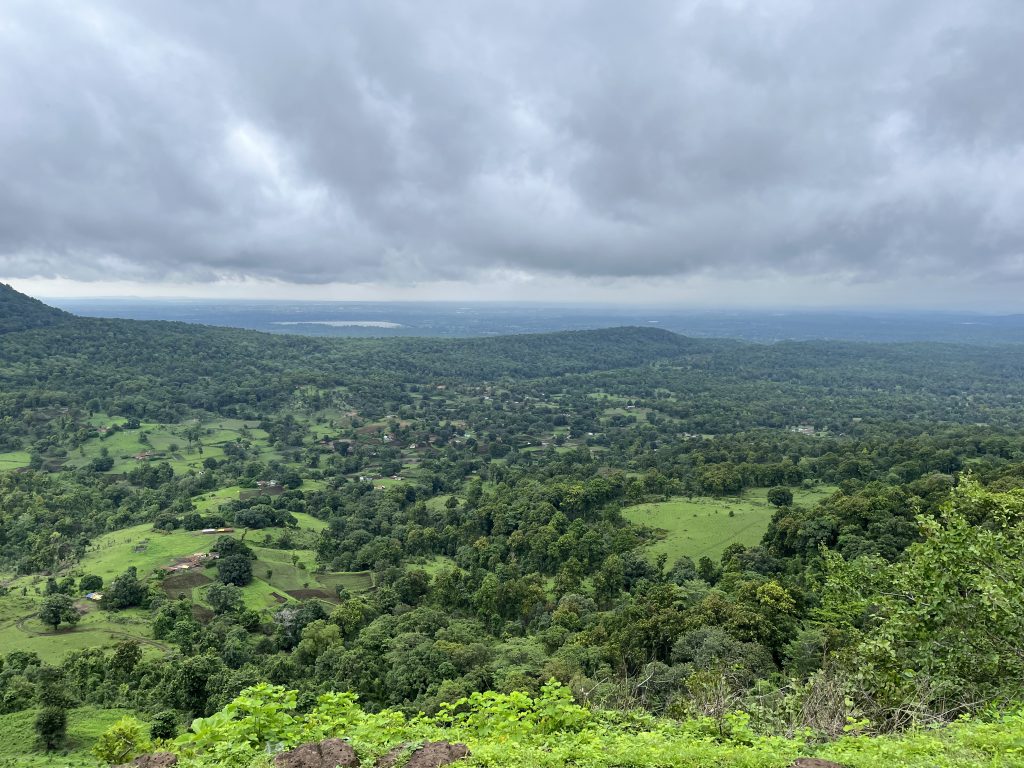
Picture this – crack of dawn on a quiet summer morning in April. One treks up to Guru Shikhar, the highest peak in the Aravallis, passing  hardwood trees of teak, bael, and amla, and wild orchids. A quick time lapse – as one peers across the crevasse of  blue-green-brown abundance, one can see the way land use has changed over the years with agriculture rising steadily in place of scrub and barren, rocky brown land. Instances of human-animal interactions are on the rise in the region, with species like the vulnerable sloth bears seeking space for food and movement, as the forests  diminish and the human footprint increases. Various studies reflect that the issues of habitat degradation, fragmentation and lack of protection of corridors that facilitate movement are impacting the sloth bear populations of the region.

Conservationists call for a holistic solution to tackle the issues faced by the species, a strategy based on landscape–scale conservation values.

Mount Abu–Jessore Ecoregion

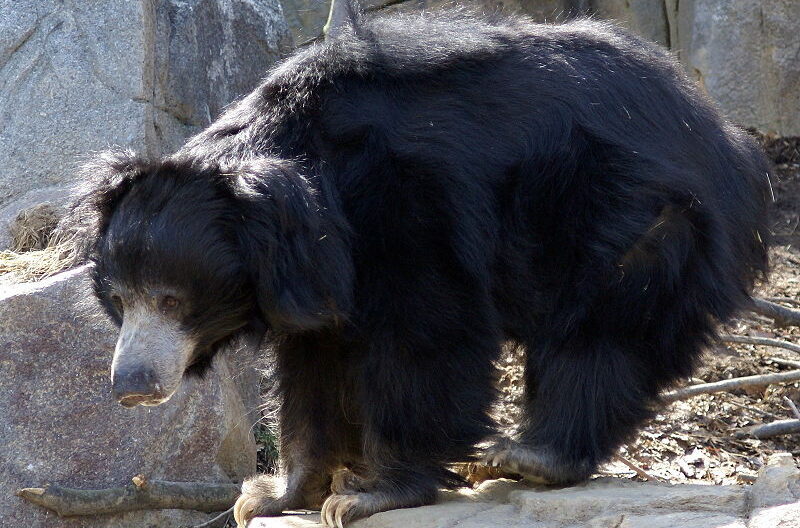
In Sirohi district of Rajasthan, nestled in the ancient folds of India’s oldest mountain range are the forests of Mount Abu Wildlife Sanctuary, which was declared a protected area in the year 1980 and was recently notified as an Eco-Sensitive Zone. The 288 km2 ecoregion is home to a variety of large fauna like Indian leopard (Panthera pardus fusca), striped hyena (Hyaena hyaena), jungle cat (Felis chaus), chinkara (Gazella bennettii) and particularly – the sloth bear (Melursus ursinus). The solitary, shaggy-coated bear, native to the Indian subcontinent is a native resident here. The mid-sized bear’s choice of meal – ants, termites and fleshy fruits – can be found here in plenty. This is incidentally the only forest in the region where one can find a variety of wild orchids. The region is plentiful in floral biodiversity with various species of sub tropical thorn shrubs thriving here, along with rare varieties of wild roses and ferns.
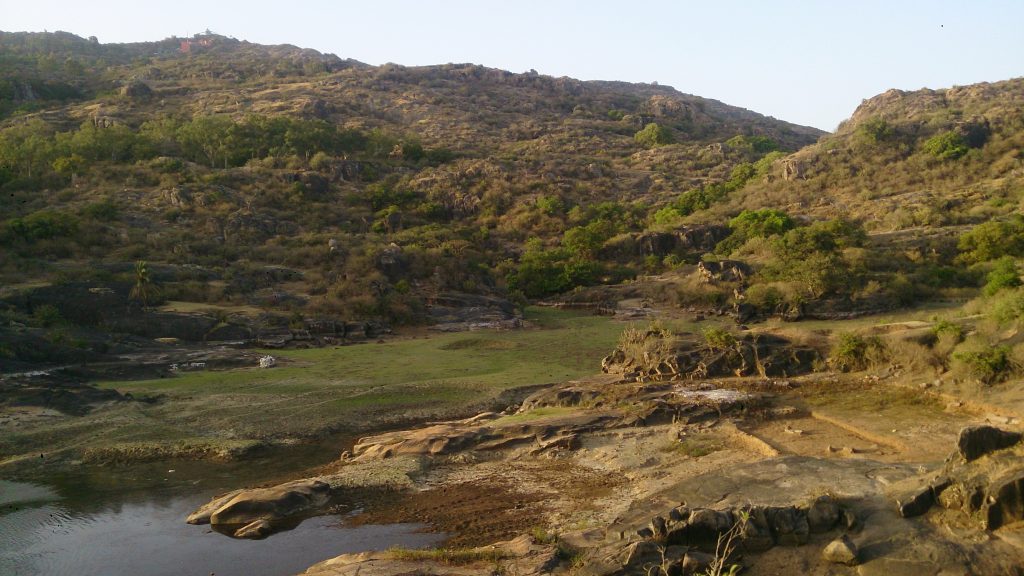
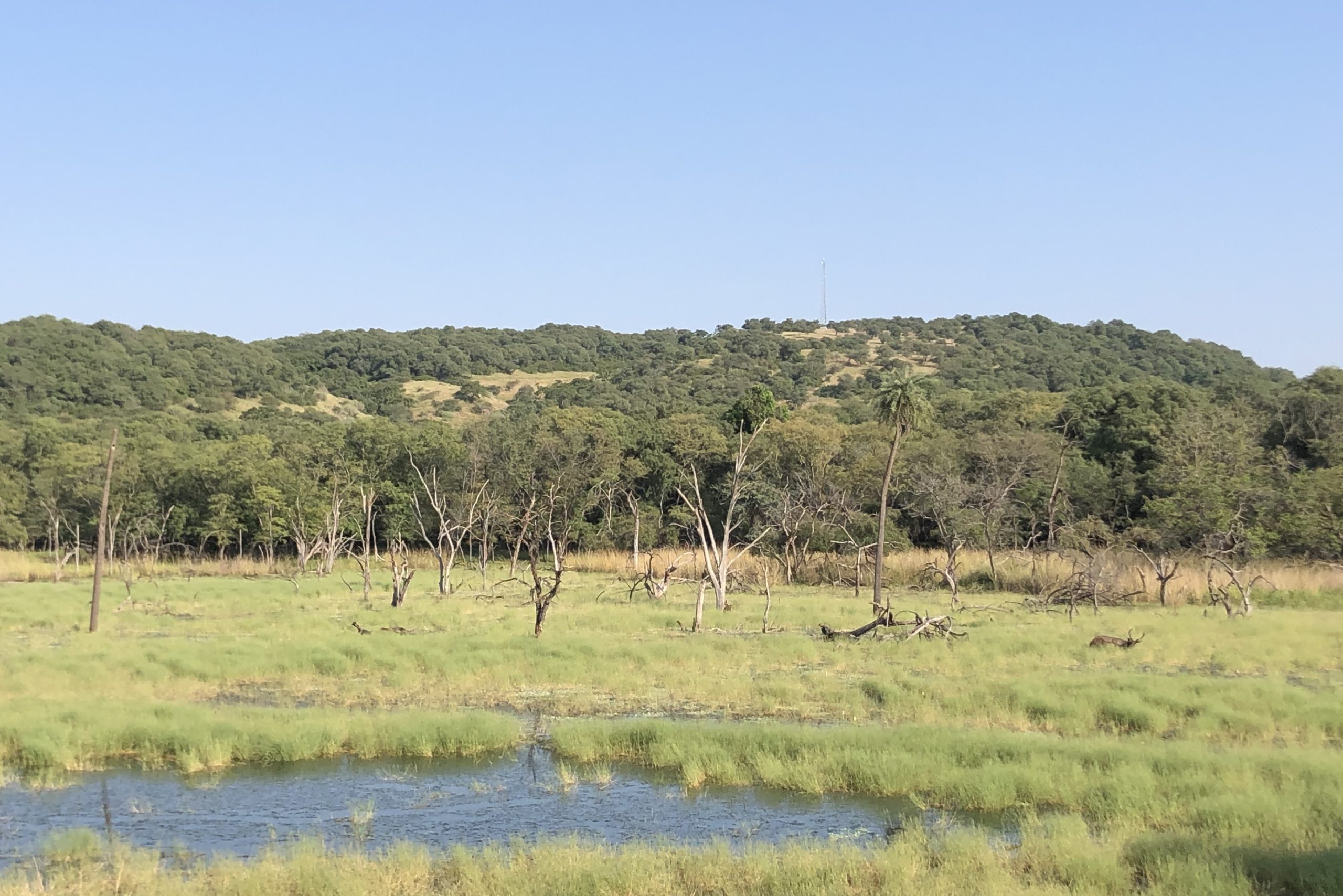
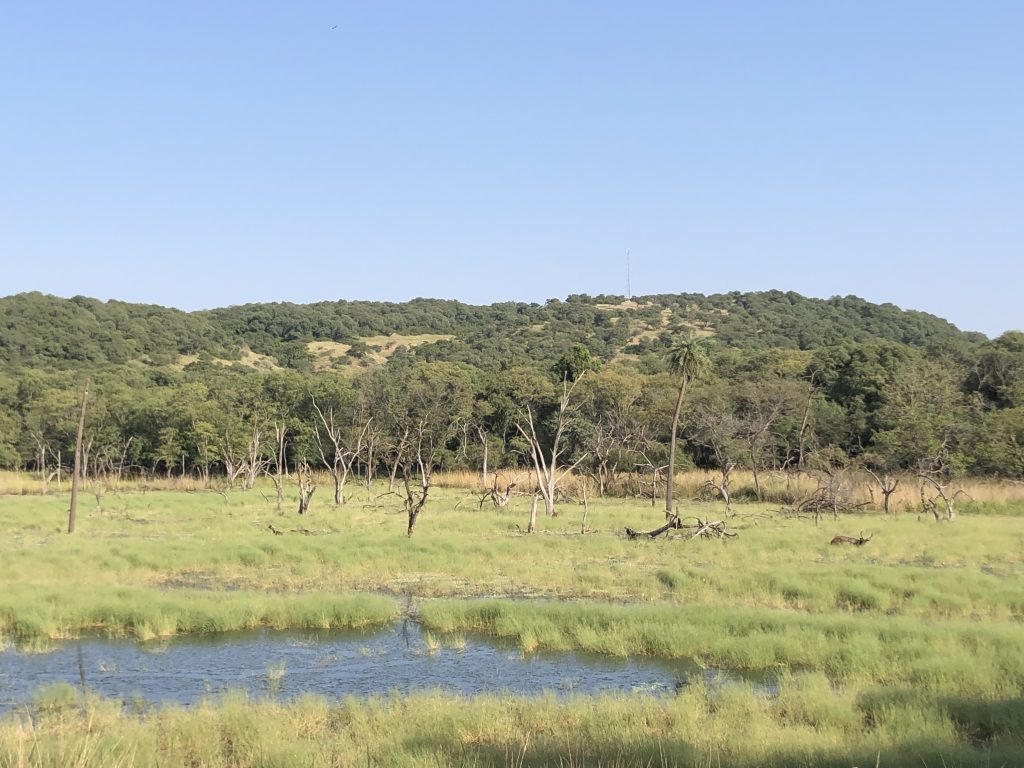
Sloth bear habitat in the Mount Abu-Jessore landscape. Photo by: Nishith Dharaiya

Upon driving approximately 60 km. southwest from the centre of the Mount Abu town in the Aravallis, one reaches the Jessore Sloth Bear Sanctuary in Banaskantha District, Gujarat, which was notified as a protected area dedicated to sloth bear conservation in 1978. Namesake to the spectacular Mount Jessore, a picture perfect backdrop, the Sanctuary is reported to support one of the highest sloth bear densities in India (Sukhadiya et al. 2013). Other fauna reported in the sanctuary are the leopard , sambar (Rusa unicolor), wild boar (Sus scrofa), Indian crested porcupine (Hystrix indica), etc. Also supporting a large diversity of birds and reptiles, the area has a great ecological significance as it acts as a buffer between the arid desert and the dry deciduous forest. 

Corridor

An approximately 40 km2 stretch of land connects Mount Abu to Jessore and acts as a corridor for wildlife movement between the areas. Set in the semi-arid – dry deciduous region of Rajasthan and Gujarat, the corridor gets its much needed respite through the small streams, rivulets originating and meeting the West Banas River. Deora Dam reservoir is one of the larger water sources of the region. It has been reported that ~68% of the corridor land is farmland with ~30% classified as Open Forest and Scrub (Vyas, 2020).  Most of the forest areas in and around this corridor act as catchment for the West Banas and assist in replenishing the ground water. Over time, this corridor has become increasingly instrumental for securing unhindered movement of sloth bears.

Significance

Since both Mount Abu and Jessore support high density of sloth bear populations in the Aravallis landscape, maintaining connectivity between these two ecoregions is crucial to ensure viability of their populations in the area. Not just for sloth bears,  Mount Abu –Jessore corridor also aids the movement of leopards and hyenas, among other species, and helps these species thrive in the region. The areas demarcate the western limit of sloth bear’s range in the Aravallis. 
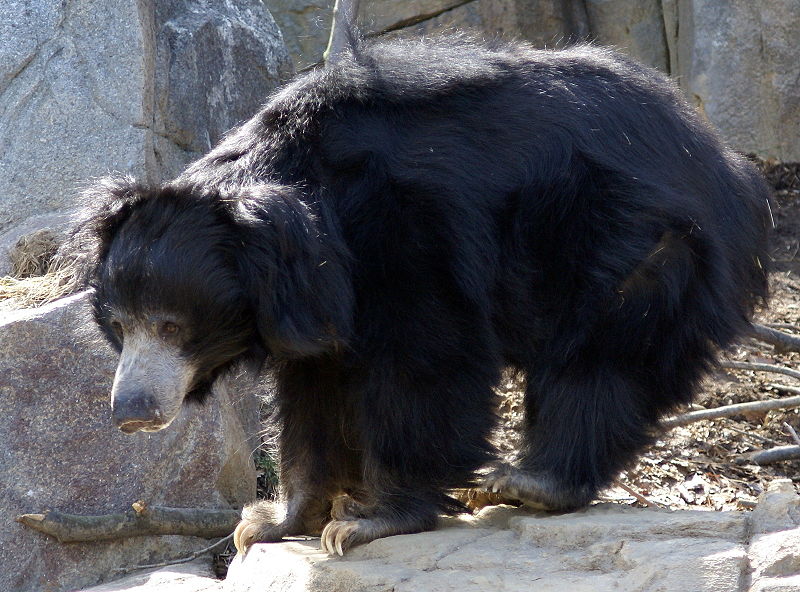
The shaggy-haired sloth bear. Photo by- Nishith Dharaiya

Shrinking Land and Lunches

As per a recent notification (2020) declaring an Eco-Sensitive Zone (ESZ) around Mount Abu Wildlife Sanctuary, most of the corridor area now comes under regulation of the Environment Protection Act (1986). ESZ’s are meant to act as ‘shock absorbers’ for the protected areas, preventing encroachment and restricting environmentally detrimental activities like mining, construction etc.

Data available on land use in the corridor suggests that there have been substantial changes in the land use pattern. Over the past 30 years, area under agriculture has increased considerably, largely owing to conversion of barren land and forests into crop fields (Vyas, 2020). This has resulted in fragmentation of forest and scrubland which provides habitat, food, and cover to various species. It is essential to protect the remaining forest and scrubland patches within the corridor from any further degradation, and restore habitat connections where needed, as sloth bears have strong habitat associations (Ramesh et al., 2012; Das et al., 2014; Puri et al., 2015 ) and a fragmented corridor could impact them dearly.

Way Forward

Sloth bear populations need to stay geographically connected to maintain healthy genetic diversity and prevent inbreeding. However, protecting and maintaining wildlife corridors in India is an epic challenge, since they don’t fall within the ambit of legal protected area category. Despite being so crucial to maintaining structural and functional integrity of an ecosystem, wildlife corridors are often given less importance in governance. Any reform must first begin here, at the foundational level of recognising these ecoregions for their immense service of ensuring habitat connectivity. While some rules and guidelines under the National Tiger Conservation Authority can be favourably invoked to provide protection to tiger and elephant corridors, more needs to be done. In a sea of human settlements, agriculture, and linear infrastructure, without wildlife corridors, forests will become isolated pockets of biodiversity, severely affecting the long-term viability of populations of many species. An effective policy with the values of sustainability and conservation-led development will improve corridor management, thereby ensuring the populations of our shaggy-haired bears are sustained.

References

  1. Patil, A. , Dharaiya, N., Thatte, P., Mount Abu-Jessore Corridor Profile, Coalition for Wildlife Corridors. 2022. https://corridorcoalition.org/Profiles/CorridorProfile_MountAbu_Jessore.pdf
  2. Sukhadiya,D., J.U. Joshi, and N. Dhairiya. 2013. Feeding Ecology and Habitat Use of Sloth Bear (Melursus ursinus) in Jassore Wildlife Sanctuary, Gujarat, India. Indian J. Ecol. (2013) 40(1): 14-18
  3. Ramesh, T., R. Kalle, K. Sankar, and Q. Qureshi. 2012. Factors affecting habitat patch use by sloth bears in Mudumalai Tiger Reserve, Western Ghats, India. Ursus 23(1), 78-85, (1 May 2012).  https://doi.org/10.2192/URSUS-D-11-00006.1
  4. Vyas, S., 2020. Assessment of change in land use land cover in Western Aravallis with respect to sloth bear habitat (M. Phil. Thesis). Hemchandracharya North Gujarat University, Patan.
  5. Das, S., Dutta, S., Sen, S., S., J. A., Babu, S., Kumara, H. N., & Singh, M. (2014). Identifying regions for conservation of sloth bears through occupancy modelling in north-eastern Karnataka, India. Ursus, 25(2), 111–120. http://www.jstor.org/stable/24643778
  6. Puri, M., Srivathsa, A., Karanth, K.K., Kumar, N.S. and Karanth, K.U. (2015), Multiscale distribution models for conserving widespread species: the case of sloth bear Melursus ursinus in India. Diversity Distrib., 21: 1087-1100. https://doi.org/10.1111/ddi.12335
  7. Dharaiya, N., 2009. Evaluating habitat & human–bear conflicts in North Gujarat, India, to seek solutions for human–bear coexistence (Research Project Report). North Gujarat. Available at:  https://ruffordorg.s3.amazonaws.com/media/project_reports/14.11.07%20 Detailed%20Final%20Report.pdf
  8. Will the latest sloth bear corridor in Mount Abu serve its purpose?
Crossing the coal corridor

Crossing the Coal Corridor

© PRASENJEET YADAV

Harshad Sambamurthy

A corridor is a passageway. It is a channel that facilitates movement. And when applied to wildlife it serves as refuge; enabling their dispersal and permitting an ease of movement through fast-changing, fragmented habitat. As the expansion of linear infrastructure continues to crisscross forests, preserving and maintaining corridors is imperative.

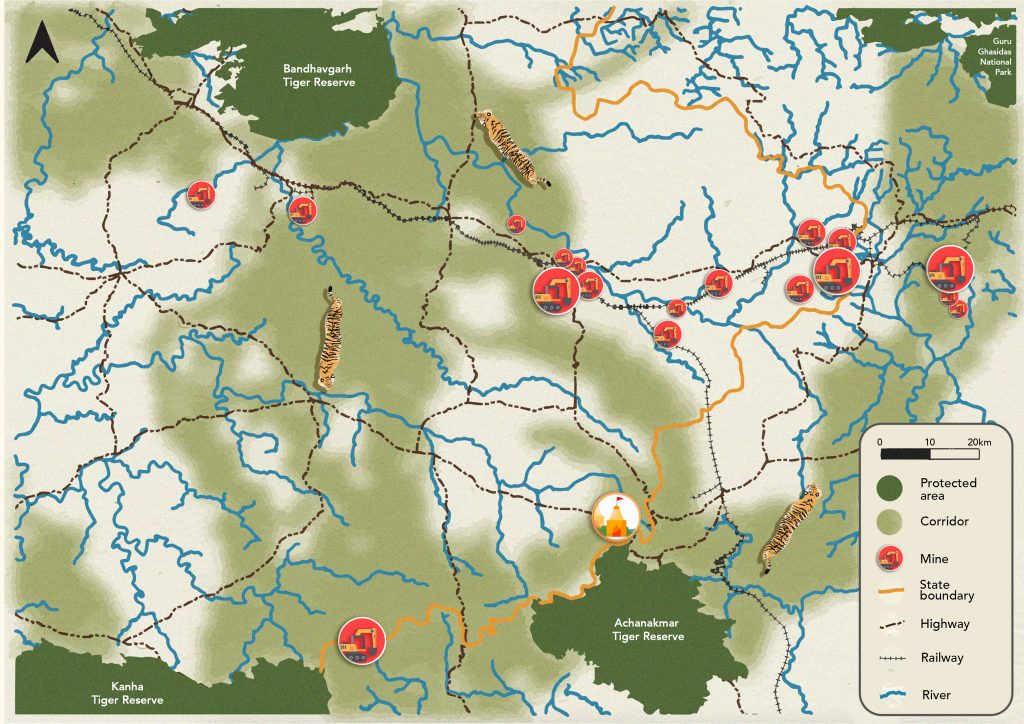
Recently, on a trip to Chhattisgarh and Madhya Pradesh, we travelled through the Achanakmar-Bandhavgarh corridor; traveling from Achanakmar in the south to Bandhavgarh in the north. Moving amongst dense sal forests drenched in monsoon-green, we arrived in Amarkantak on a stormy night. A pilgrim town, it serves as the beginning point of the rivers Narmada, Son and Johila. Last year, two tigresses had moved from Bandhavgarh Tiger Reserve to Achanakmar. One theory suggests they might have navigated along the Johila that stretches across the entire corridor. According to one forest official we met, Gaur are said to have used such a route more than ten years ago. The tigress’ movement underscores the importance of this stretch, and links corridor conservation to water security. Obstacles abound however, with mining and infrastructure development showing few signs of slowing down.

Map illustrating connectivity between Bandhavgarh and Achanakmar tiger reserves (Map and illustration: Aditi Rajan/WCS; Prachi Thatte/WWF)

Recently, in May 2021, Madhya Pradesh’s Chief Minister, Shivraj Singh Chouhan, declared that no new construction will take place in Amarkantak; to help combat water contamination in the Narmada. This is a welcome decree, however, existing roads continue to thwart safe passage. In June, a smooth-coated otter was found dead on the State Highway between Amarkantak and Anuppur; a victim of roadkill. Scores of roadside eateries and dhabas along such roads use fulgent fluorescent bulbs at night that likely deter animal movement; who probably shy away from the overbearing, polluting light. Human settlements also attract dogs who prey on herbivores, like spotted deer. In the central part of the corridor, in Anuppur town, there is a thermal power plant, along with bauxite, dolomite, and granite mines. Open-cast coal mining occurs in the Bijuri range of Anuppur forest division. Here, there is confirmation of wayfaring elephants roaming through barren lands, an isolated population of Malabar giant squirrel, and a sloth bear population in Jathari range. Rich in biodiversity, striking the balance between environmental health and the execution of development priorities is pressing.

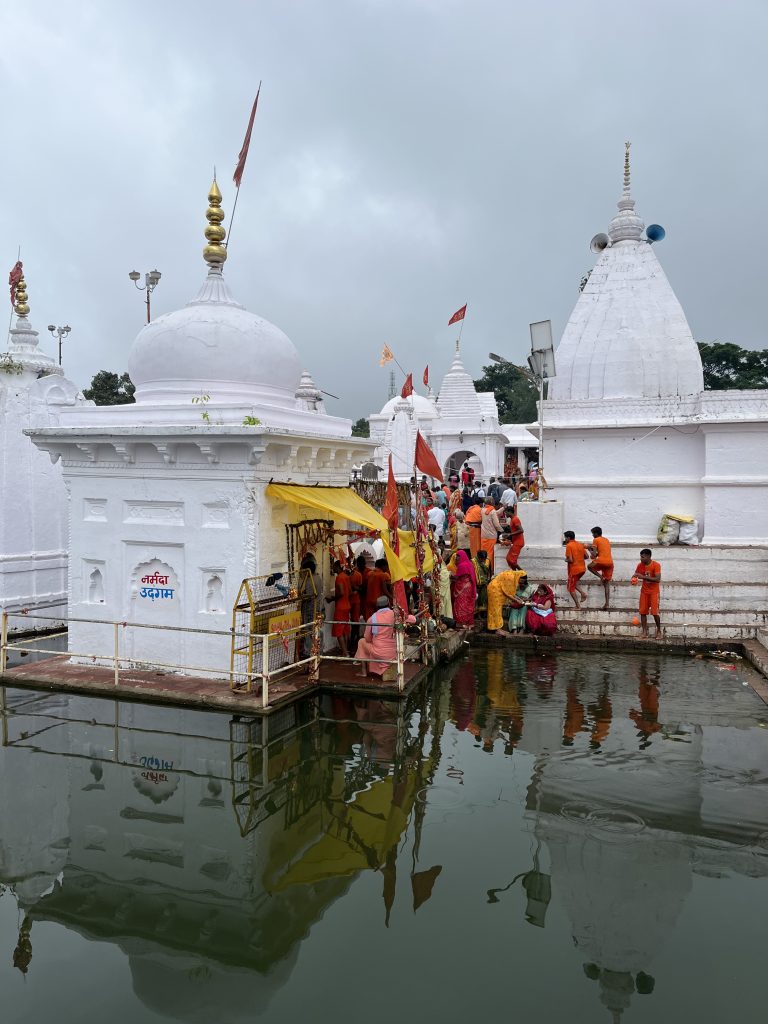
Saffron-clad devotees throng the Narmada Kund mandir in droves one drizzly morning (Photo credit: Author)

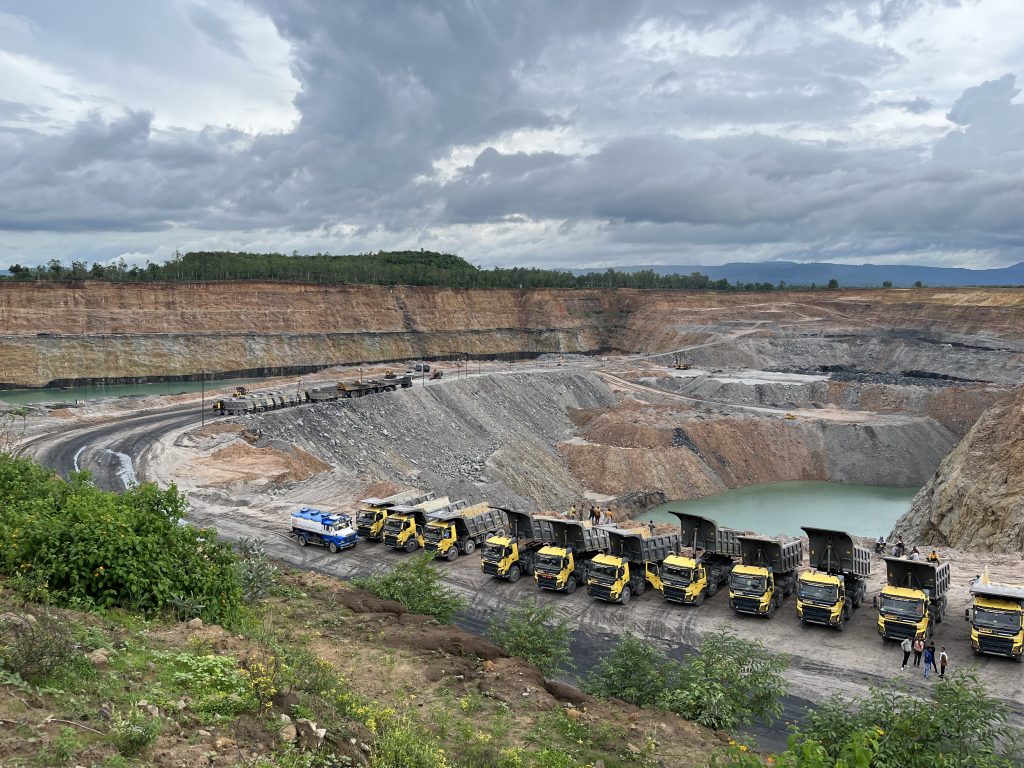
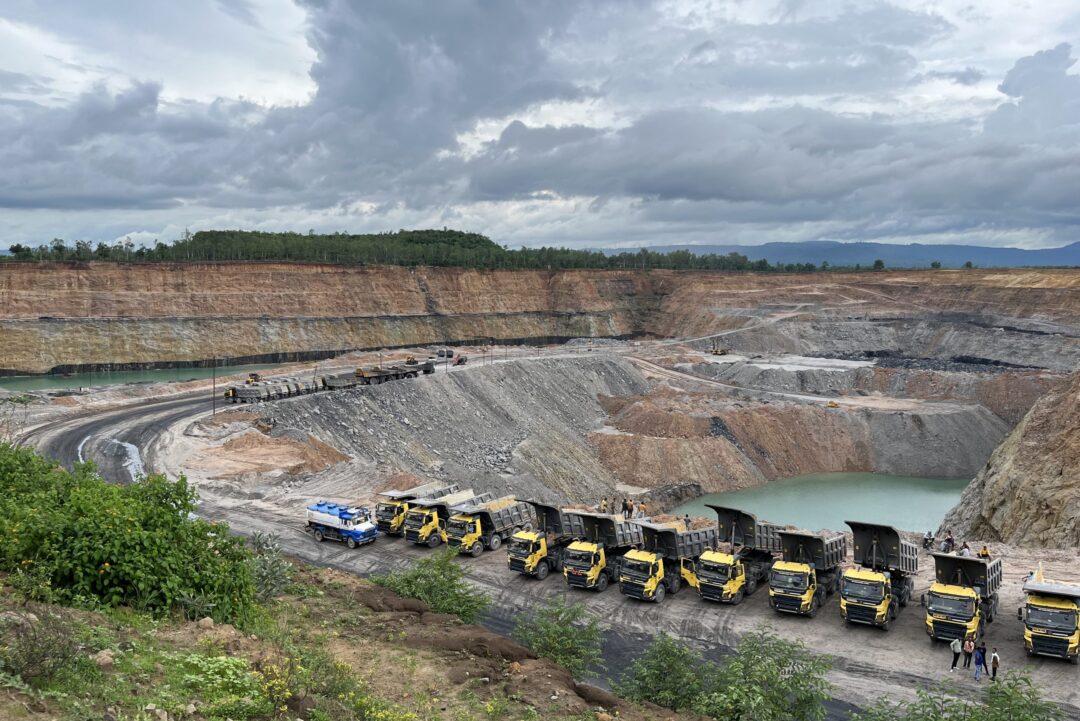
As we moved into the municipality of Dhanpuri in Madhya Pradesh’s Shahdol, we visited a coal field. This was part of the larger Sohagpur coalfield operated by South Eastern Coalfields Limited; the largest coal mine in Madhya Pradesh situated at the basin of the Son river. Terraced mountains of gravely sand towered above excavated ponds of foggy-grey, icy Ammaroo turquoise. Mustard-coloured trucks with black carriers were bunched together like a swarm of hungry wasps. Poignantly, isolated patches of clumped-together trees floated above these mounds like shattered chandeliers. With coal demand high, lengthy trains with charred carriages carry coal by the tonne along the high-priority coal freight corridor. Advocating alternative energy sources as a substitute for coal will likely be difficult in the short-term; given its essentiality for powering countless activities. On the other hand, shifting a corridor to allow for the expansion of coal is likely to lead to increased human-wildlife encounters as animals are forced to move in new directions using previously unexplored paths. This can have knock-on effects for communities who are not necessarily equipped to deal with wildlife.

Having your trucks in a row (Photo credit: Author)

As we continued North and approached Bandhavgarh, a jungle cat slipped past. Its silhouette caught in the glare of the headlight looked like a blanched apparition. Numerous resorts abound along the popular Tala zone. A multicoloured water park is one such bizarre construction. While meeting the Deputy Director of Bandhavgarh, he emphasised the vitality of “safe passage”, noting that infrastructure development in and around vulnerable villages—especially those new to elephant movement—is critical. He also highlighted the need for the construction of clearly visible, and strategic underpasses, concerned that there is little “free movement” for animals along highways or railway tracks, as the lethal combination of high speeds and few underpasses make it difficult to safely navigate across. Between Katni and Bilaspur, a triple railway line has now been approved with 8000 trees sanctioned to be cut in Umaria alone. Thus far, more than 4500 trees have been chopped. Given that a corridor is not officially notified, it makes passing environmental clearances for linear infrastructure projects that much easier and hassle-free. Presently, the roads between Dindori and Jabalpur, and Dindori and Mandla are being expanded, with forests on both sides of the road.

While traveling to Umaria, we sped past a crushed carcass of a jackal. Last year, in Ghunghutti range of Umaria Forest Division, a tiger cub was struck by a car along a blind corner on national highway NH-43. We visited this spot, and were told that mitigation measures have been put in place. This included straightening the road—not very noticeably—to reduce its curvature. While here, we couldn’t help notice the construction of a bridge over a two-lane railway track. In a span of fifteen minutes, three separate trains carrying coal trundled past. Roads and railways unfortunately kill numerous species, but these often go unrecorded, as these animals—blackbuck, pythons, langurs—do not command the media’s attention as much as a tiger or elephant kill probably does. Mitigation measures to avoid such fatal animal- vehicle collisions is perhaps well illustrated in the nearby Kanha-Pench corridor. A section of that corridor is cut by NH-44. To mitigate impact, five underpasses and four minor bridges were constructed to help facilitate the movement of wildlife.

Increasingly, large mammals like tigers and elephants are being documented outside designated protected areas. For example, tigers have been recorded within 2-4km of Umaria town. Wildlife also use farmland and crop fields as pathways. No more are they restricted to the boundaries of a designated national park, tiger reserve or wildlife sanctuary. Such movement patterns further underline the crucial role corridors play for wildlife dispersal. Basic awareness on corridors, and their utility must increase. Maintaining corridors is pivotal for wildlife conservation; encouraging animals to move between subset populations and promote genetic exchange, while also providing spaces for these animals to freely move without having to enter human-dominated areas for connectivity.

A section of the corridor from a viewpoint near Amarkanthak (Photo credit: Author)

When a corridor is maintained, it often serves several species, not just the ‘charismatic’ few. Pushing for a moratorium on forest clearances for coal mining (Greenpeace, 2012), or advocating for stringent environmental impact assessments prior to highway expansion proposals might lead to more opposition than support. The case for conservation then, comes down to perceptions; the cornerstone of which is awareness. Along with awareness, calculating a corridor’s value will strengthen general understanding regarding its potential economic contribution towards the broader canvas of enriching India’s natural heritage. To embed corridors as a mainstay of conservation planning in Central India, practitioners must continue to facilitate dialogue and discussion between key stakeholders from the local community, the Forest Department, Railways Department, National Highways Authority of India, and Coal India Limited.

Forest department staff indicated that the maintenance and conservation of corridors is not always budgeted for in division-level workplans, despite there being a section on corridors in each Tiger Reserve’s Tiger Conservation Plan (TCP). Mapping and delineating the Achanakmar-Bandhavgarh corridor in the TCP will bring greater attention to its significance, apportion much-needed money for its monitoring and maintenance, streamline the process of preservation, and strengthen the legal framework for its conservation, in what is otherwise a vague definition at best in articulating the roles and responsibilities of who is responsible and accountable for its management. Notification will provide much-needed legitimation for corridors. Constitutional recognition of a corridor is necessary, but without increased, transparent dialogue among key stakeholders, the needle is unlikely to move, by which time, the corridors of Central India might be blackened by the fast-gathering clouds billowing from its depleting coal reserves.

Traveling the Ranthambhore-Kuno Wildlife Corridor

Traveling the Ranthambhore-Kuno Wildlife Corridor

© PRASENJEET YADAV

Harshad Sambamurthy

Ranthambhore has long served as the stock backdrop for the perfect tiger picture. As the erstwhile hunting grounds of the Maharajas of Jaipur, derelict lookout posts still remain; adding a novel, and deservedly royal touch to the tiger’s home. Culturally diverse, and rich in oral stories spun from the most attractive yarn; Ranthambhore has fast become synonymous with tiger tourism.

My fascination with Ranthambhore began in 2007 while volunteering remotely to help raise funds for the NGO Tiger Watch. This attraction gradually gathered pace after picking up my first book by the revered tiger conservationist Valmik Thapar, and the subsequent urge to visit the forest surged ferociously, but due to the inaccessibility of being based elsewhere; was suppressed; resigned to remain dormant, patiently awaiting to pounce upon the opportunity which eventually presented itself fourteen years later.

Arriving in Sawai Madhopur—the nearest town to Ranthambhore—the tiger’s face is plastered across every imaginable space of wall, and the surfeit number of gypsy jeeps and canter trucks demonstrates the pull of the tiger. The frequency of these images however, are in distinct contradiction to the reality of spotting the actual animal. While there, I visited the park, but the forests stood eerily quiet. Apart from a bulky sambar stag foraging in a distant clump of bush, it was difficult to accept that other animals existed in the reserve. Returning from the afternoon’s excursions, vexed at my tiger-less outing; it was mildly comforting to hear that other tourists were equally luckless. Some scowled with displeasure, while others bore their confoundment plainly; lamenting their fate.

A lonely sambar in a quiet Ranthambhore forest

Despite my ill-luck, the forests are home to large carnivores like tigers, leopards and bears; smaller predators like the caracal, desert cat, and prey like sambar, chital (spotted deer), chinkara (Indian gazelle) and wild boar. Yet, perhaps catalysed by burgeoning tourist pressures, the larger Ranthambhore landscape is rapidly changing. The unsustainable usage of non-timber forest products; illegal sand, gravel and stone mining; the construction of linear infrastructure; and the spread of invasive weeds like Prosopis Juliflora are dramatically remoulding the landscape’s entire appearance. Prosopis was introduced in the 1980s; aimed at providing firewood to communities in the Chambal region. Planted along with other species in the name of restoration and to disrupt the movement of bandits, was discontinued in 1995, but having taken root, its spread has been ubiquitously devastating.

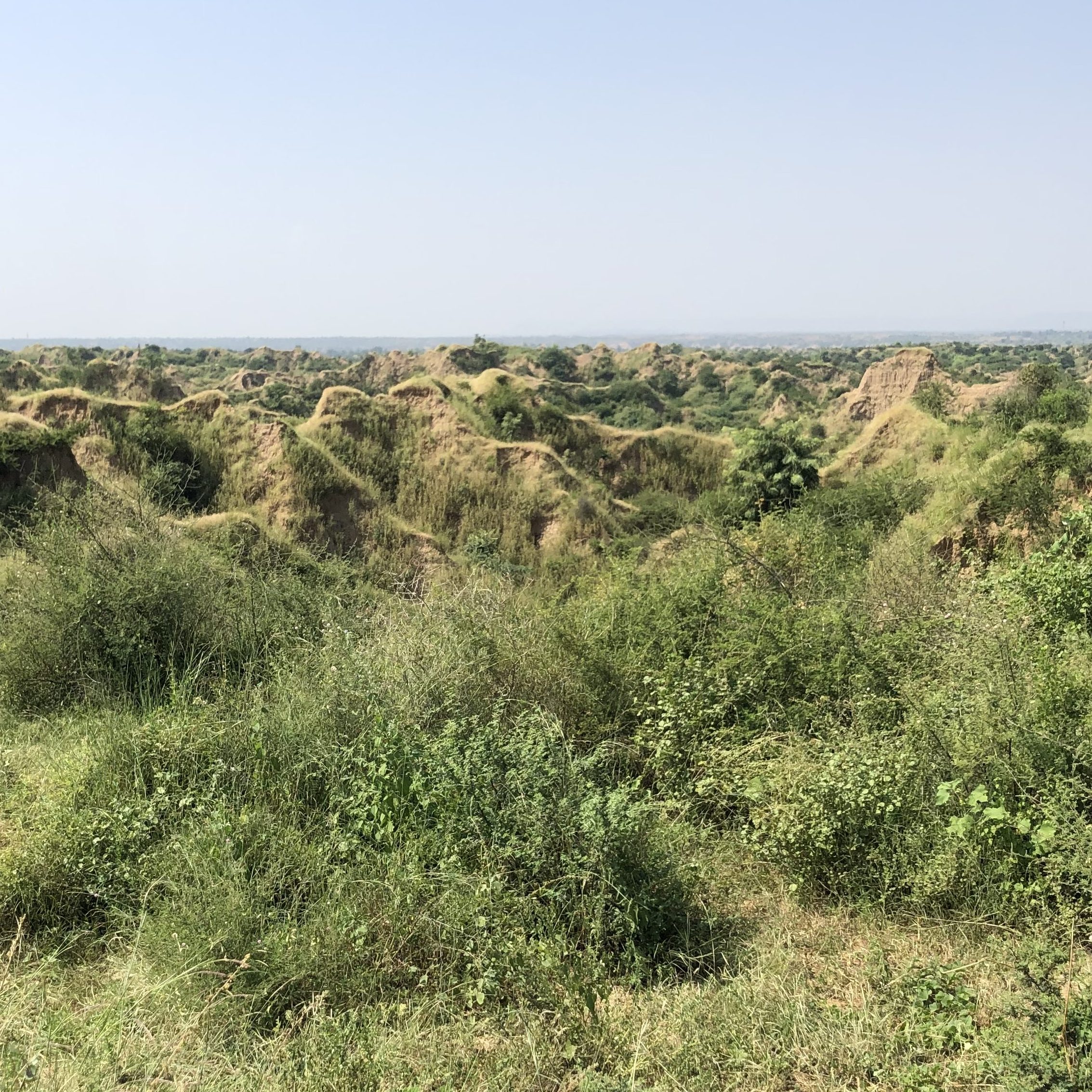
The tigers here; genetically distinct and suited for the harsh climate are predominantly concentrated in and around Ranthambhore National Park and Tiger Reserve. Tigers require large home ranges however, and often disperse through wildlife corridors. These corridors are essentially routes that promote the movement or migration of animals between connecting habitat patches; often used to expand home ranges and support genetic exchange. Maintaining these crucial dispersal pathways— that are swiftly succumbing to agricultural pressures and being squeezed into tinier slivers—is imperative for landscape-level conservation projects. Ranthambhore’s tigers prefer to move, and do so in three different directions. Their movement Eastward through the Ranthambhore-Kuno Corridor (RKC)—perhaps more vital because it connects them with other tigers in Madhya Pradesh—was what piqued my interest. Leaving Sawai Madhopur, our four-person WWF India team traveled towards Sheopur, in neighbouring Madhya Pradesh, and onwards to Kuno Wildlife Sanctuary. En route, we crossed the glorious Chambal; its ripples glimmering in the noon shine; then alongside deep, jagged and precipitous ravines that keep hidden a panoply of creatures; and thereafter, the mesmerising greenery of the Sheopur forest division—where we spotted a flock of vultures feeding on the innards of a buffalo corpse—on a near perfect linear stretch of asphalt.

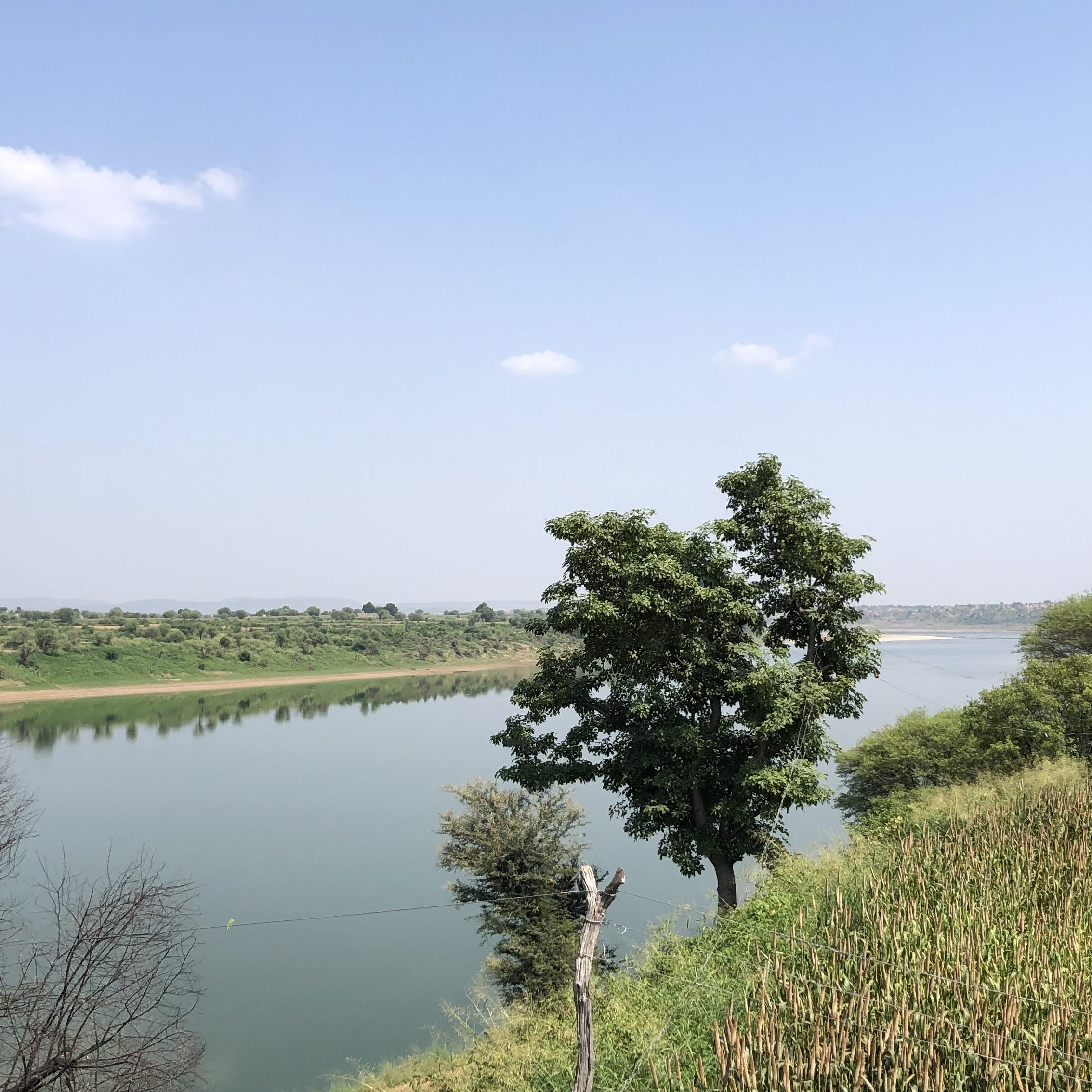
The Chambal River

Our colleague Sonu was wearing a Kuno Wildlife Sanctuary shirt which had the illustrated face of a lion as the emblem. I was rather perplexed, for I thought the Asiatic lion was only found, isolated, in Gir National Park, Gujarat. The late Maharaja of Gwalior believed that lions once roamed over the territory of his state and was determined to reintroduce them; importing three pairs of African lions for an “experiment” in the Sheopur-Shivpuri forest division (Singh, 1959). With the lions initially kept in an enclosure, they were gradually released. One such lion was found dead in an open expanse, badly mauled, with the incisive precision characteristic of a tiger. Col. Kesri Singh—the former in-charge of the Shikarkhana (hunting department) for Jaipur and Gwalior—contended that tigers are the stronger animal. When he organised private shows that pitted a lion against a tiger, the lion would first strike, and instigating the tiger’s wrath, swift swooshes of the tiger’s forepaws made the lion retreat. With the tiger unwilling to pursue, the bizarre spectacle abruptly concluded. As tigers are known for their infamous intolerance of foreign incursions into their territory; Singh maintained—and this is unverified—that the tiger was responsible for the near extermination of the lion in India; killing it wherever it encountered the other big cat. The lions, he believed, were eventually forced to seek refuge in Gir, which is separated by more than 150 kilometres of difficult terrain from the tiger’s nearest stronghold (Singh, 1959). A local sarpanch (an elected decisionmaker), in the village of Ghugus Gaon; just outside of Birpur, Madhya Pradesh told us that tigers perhaps existed in Kuno in the 1960s. Clad in a loose white banian and punctured dhoti, he explained in a low drawl, in between sips of milky tea, that tigers still move through the RKC; utilising the cover and extensive labyrinths of the deep ravines as a passageway. With a grimace of concern, he bemoaned the mounting development pressures, warning that the number of tigers using this corridor are likely to reduce.

Just as lions might have sought sanctuary in Gir, away from the territorial terror of the tiger, wildlife are now contained—so to speak—in present-day sanctuaries, national parks and protected areas; that are fast becoming green blotches in the larger canvas of development. These scattered patches of connecting forest that serve as habitats in a rapidly-changing mosaic are now those same corridors that require maintenance and preservation. Wildlife corridors provide important dispersal pathways for animals, and serve as an ecologically-sensitive buffer region at the edge of a protected habitat. With human habitations extending near to—or sometimes inside—forested-areas, the possibility—and concomitant probability—of human-wildlife interactions increasing can have detrimental consequences. Corridors can help cushion and absorb the impact of such interactions; especially if they were to become negative. The corridor—like a string that connects the various natural pearls it holds—is part of a larger concatenation; linking the animals it allows to freely move with the communities and livelihoods they rely upon. In India, where sharing spaces with wild animals is as natural as the changing of seasons, the continued preservation of wildlife corridors—like the RKC—can ensure secure mobility of migrating fauna and the promotion of genetic exchange, while concurrently granting humans the space to safely negotiate these areas; giving voice to the language of co-existence.

Amidst a labyrinth of ravines that serve as cover and passageway for tigers. Ravines are classified as ‘wastelands’

Bibliography

  1. Khandal, D., Khandal D, and Sahu, Y.K. (2014) “The Marco Polos of Ranthambhore” Save Us Magazine.
  2. Ranganathan, P. (2017) “The Effects of Land Use Change on Carnivore Use of Wildlife Dispersal Routes in Ranthambhore Tiger Reserve, India” ATREE.
  3. Shah S., Nayak S., Gurjar R. and Borah J. (2015) “Beyond the Realms of Ranthambhore: The Last Abode for Arid Zone Tigers. Status report of tiger and its prey in the Western India Tiger Landscape” WWF India.
  4. Singh, K. (1959) “One Man and a Thousand Tigers” Dodd, Mead & Company.
  5. Singh, P., Reddy, G.V. (2016) “Lost Tigers Plundered Forests: A Report Tracing the Decline of the Tiger Across the State of Rajasthan (1900 to present)” WWF-India.