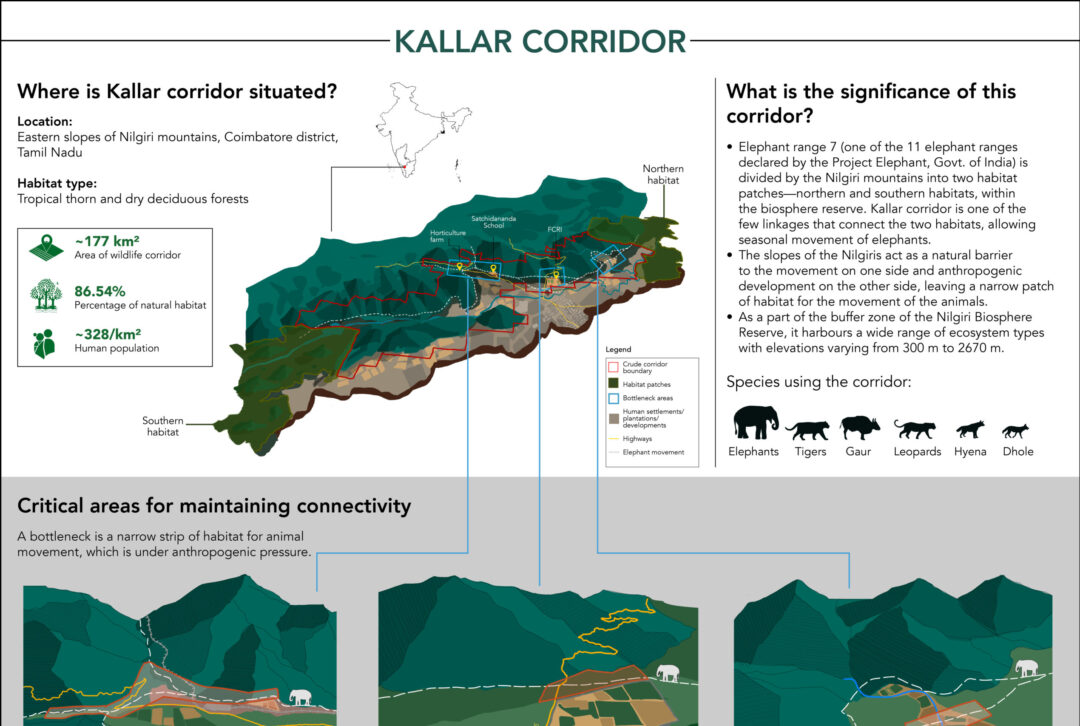
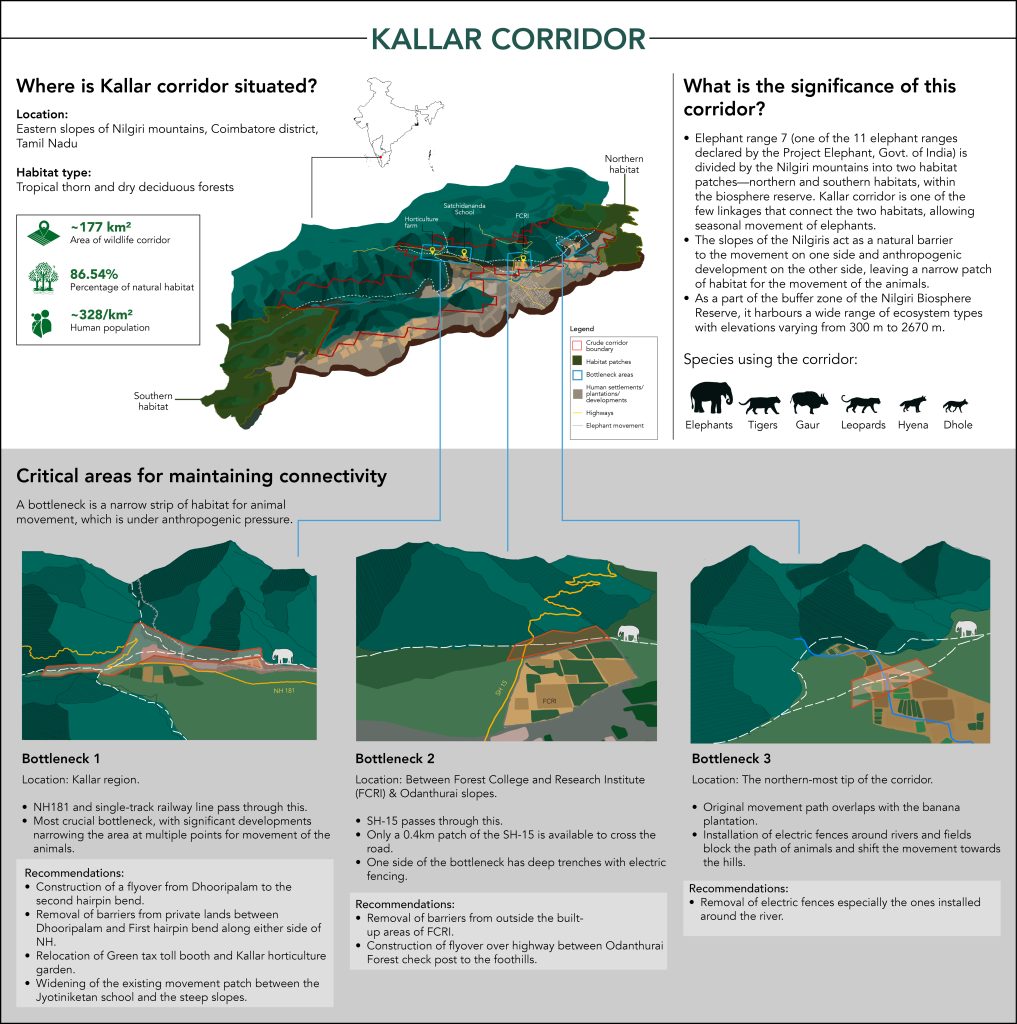
Located on the eastern slopes and foothills of the Nilgiri mountains, the Kallar corridor connects two parts of the largest elephant range in India. The slopes of the Nilgiris act as a natural barrier to elephant movement on one side of the corridor and anthropogenic development on the other side. It leaves a narrow patch of habitat for the movement of the animals. Apart from elephants, this corridor is used by several other mammals, including the tiger, leopard, sloth bear and striped hyena. Electric fences around farms and institutions that overlap with the corridor, as well as increased traffic on national highway NH-181 passing through the corridor, impede animal movement and are a significant concern.
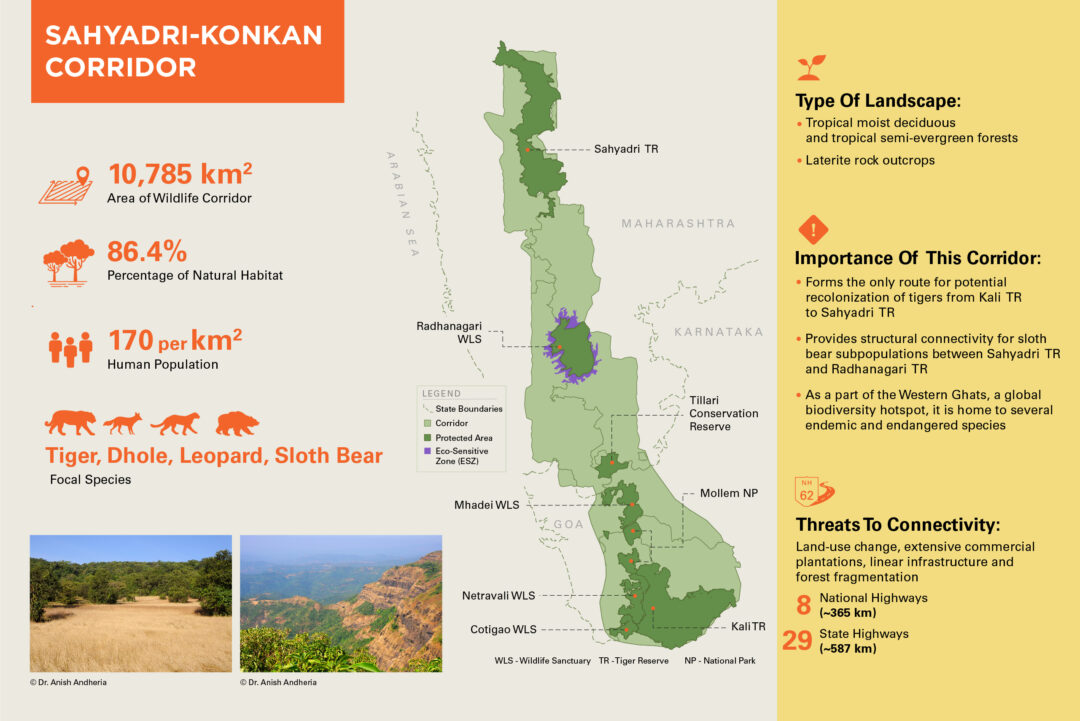
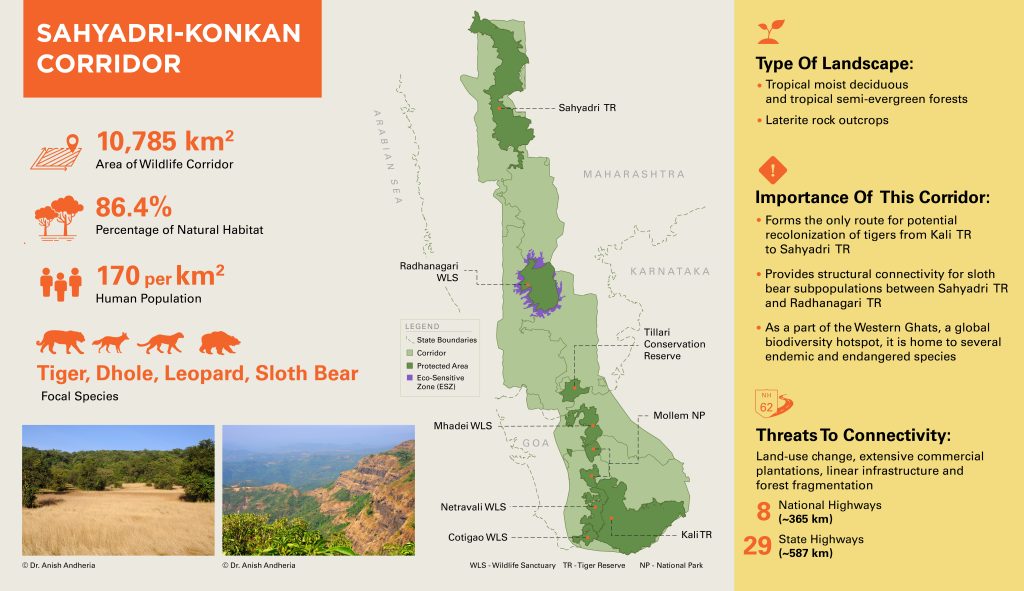
Nestled in the north central Western Ghats—a global biodiversity hotspot and UNESCO World Heritage site—lies the Sahyadri–Konkan corridor. It runs nearly parallel to the Western coast of India and spans across Maharashtra, Goa, and Karnataka. As the Western Ghats traps the moisture of winds from the Arabian Sea, they create a tropical climate along this region, which supports a wide array of endemic flora and fauna. Few sites within the corridor, such as Amboli and Tillari, often make headlines as several new species of amphibians, reptiles, and other taxa have been discovered here. Tillari is also critical as it forms a pinch-point for the movement of large animals, including tigers, from their source population in Karnataka to Maharashtra. The scenic landscapes and thriving biodiversity of these sites attract droves of researchers and nature enthusiasts.
Though this corridor houses picturesque hills, rocky plateaus, and dense forests, it is considerably fragmented. Moreover, large swathes of the corridor area in Maharashtra are dominated by private lands, which are under the constant threat of being transformed into cash crop plantations or other land-use types. Despite these challenges, several large animals use this corridor, including tigers, leopards, dholes, sloth bears, and gaur. For the survival of large mammals in this landscape, it is crucial that connectivity is maintained throughout the corridor.
To know more about the Sahyadri–Konkan corridor, have a look at Rizwan Mithawala’s conversation with Girish Punjabi, a wildlife biologist with Wildlife Conservation Trust, who has worked in this corridor for over a decade: Securing the Sahyadri-Konkan Corridor